
Energy PPA · Site-by-site assessment
Energy savings. No upfront investment.
Your shopping center, hospital, school, university or business can access solar energy without providing upfront capital for studies, equipment or installation.
EV charging stations with no installation cost, depending on the project.
For feasible projects. Each site is assessed individually; the tariff, savings and included charging stations are defined in the PPA proposal and agreement.

WORKING TOGETHER
From your site to solar energy- Assessment
- Design
- Operation
The model, made clear
Who provides what.
A PPA is an energy purchase agreement: the project finances the solar system and your organization buys the energy it generates at the agreed tariff.
 The project
Finances studies, equipment and installation.
 Solar system
Generates energy at the site.
 Your organization
Provides the space and consumes the agreed energy.
No upfront investment
When included in the approved project. Quantity, operation and energy consumption terms are defined for each site.
Energy is paid for at the agreed tariff. Savings depend on the site assessment. Agreements run for 15 or 20 years; at the end, included assets transfer to the client without additional payments, under the agreed terms.
Check whether my site can be assessed →Every site has its own potential
Energy for the places people use every day.
We evaluate consumption and space at each site, with no initial investment from the customer for viable projects.
 Shopping centers
 Hospitals and clinics
 Schools and universities
 Business and industry
Initial criteria
What a site needs to be assessed.
Meeting these points allows the analysis to begin, but does not constitute automatic project approval.
- Monthly use from COP $2 million
The threshold is reviewed per site and has no upper limit.
- Potentially usable surface
A roof, rooftop, or open parking area with compatible shade conditions.
- Long-term presence
Ability to maintain operations at the site during a 15- or 20-year agreement.
- Recent energy bills
Ideally six bills; one is enough for a preliminary review.
- Overall feasibility
Progress depends on technical, energy, financial, and contractual assessment.
PPA assessment
Let’s assess your site.
If monthly energy use is COP $2 million or more, we can review the opportunity and schedule a meeting to explain the model.
- This is a preliminary site assessment, not an automatic approval.
- You do not need to upload or attach the bill at this stage.
- The request is sent to contacto@zaxon.co.
What happens next
Explore at your own pace
The details of your project.
Rooftops, solar carports and EV chargers
Potential infrastructure
We design around the available space.
The configuration is selected after validating surface area, shade, consumption, connection, and the financial structure.
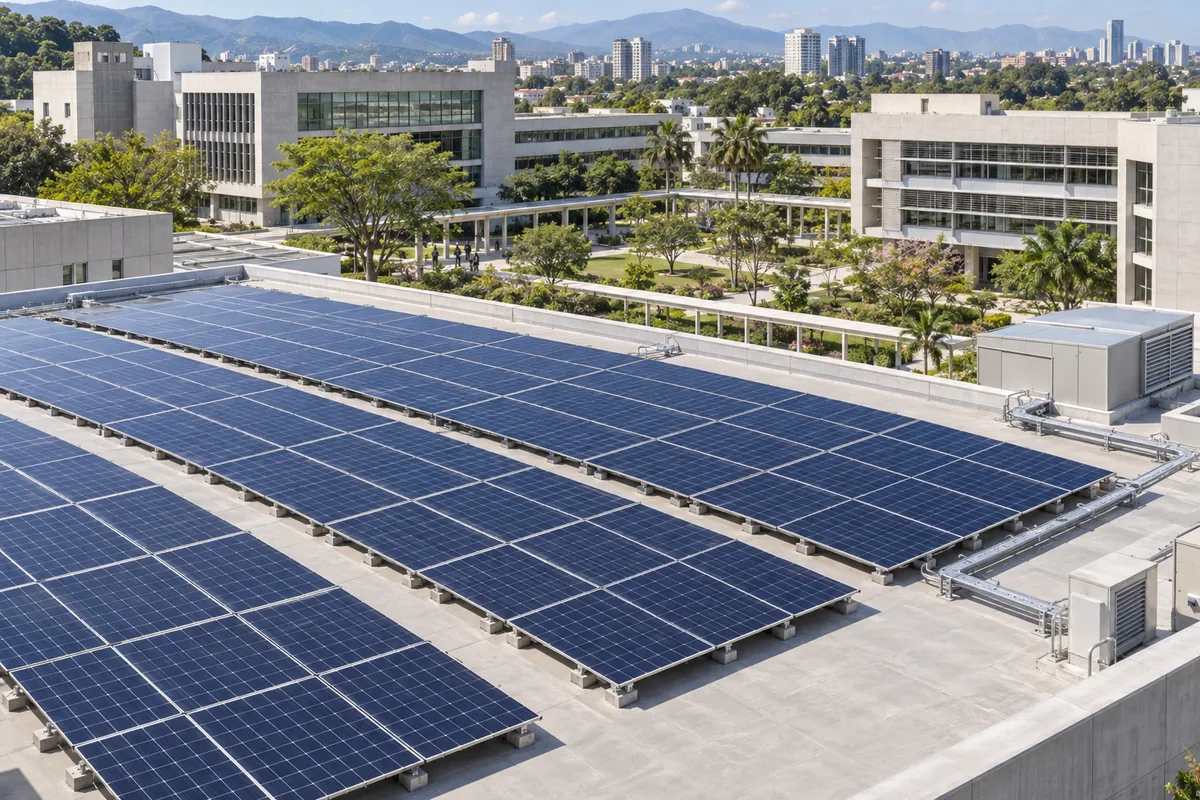
Solar roofs and rooftops
We use existing surfaces to generate energy close to the point of consumption.
- Industrial roofs
- Institutional rooftops
- Shade assessment
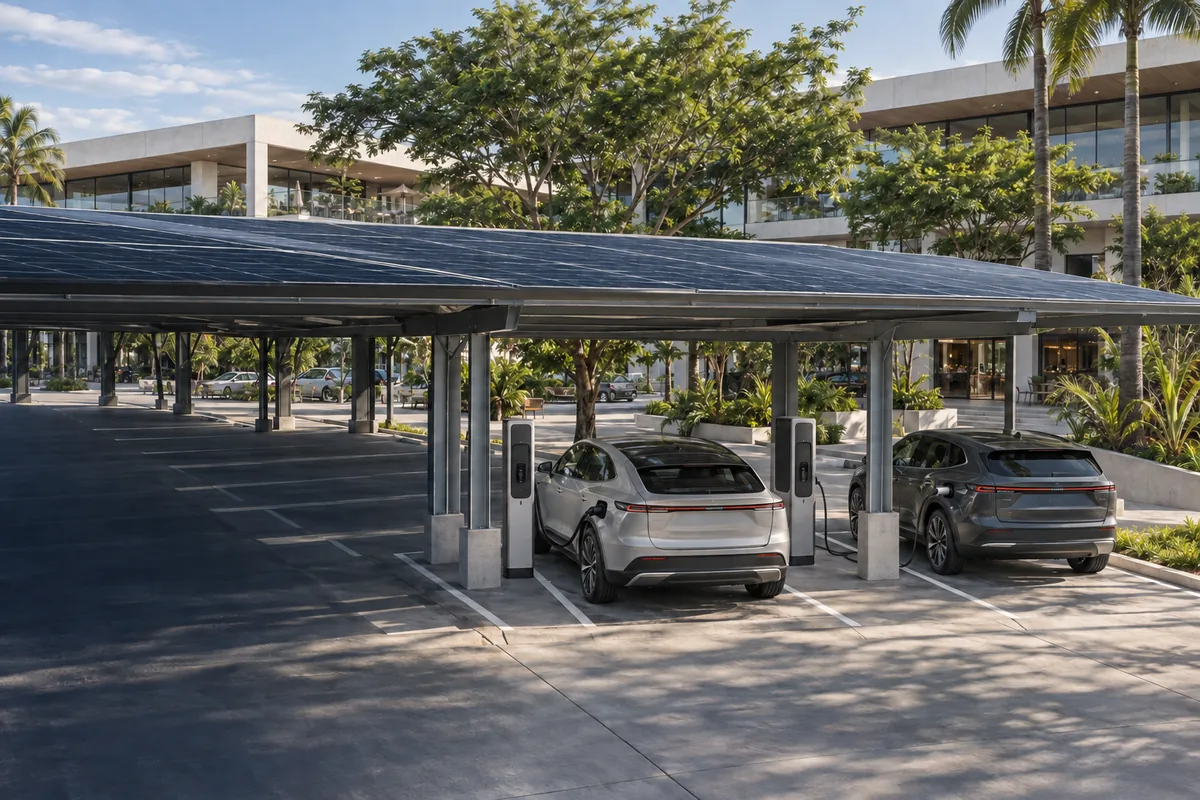
Solar carports
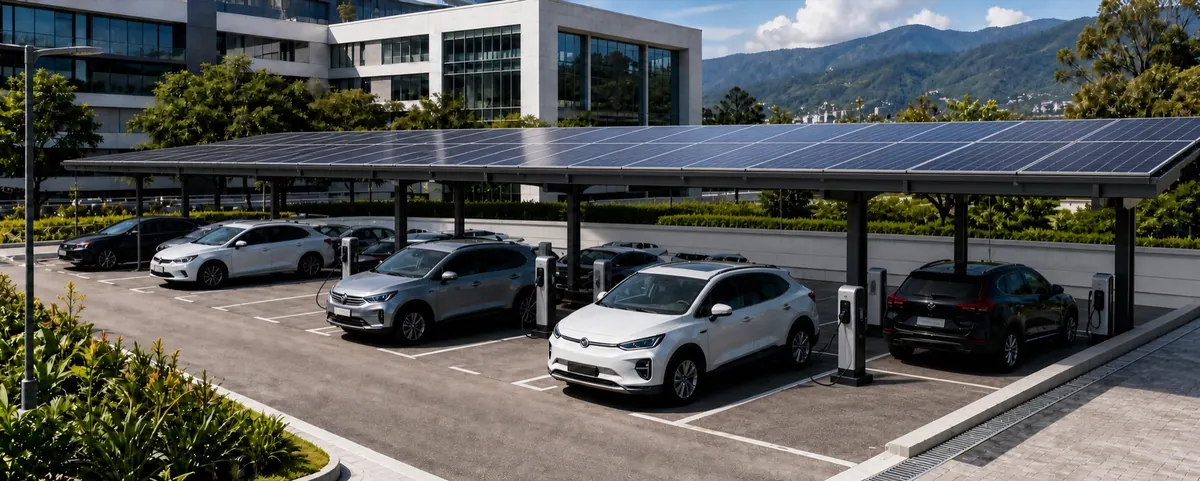
Your parking area can generate energy, provide shade and include EV charging stations with no installation cost to the client when covered by the project. Rainwater collection is also assessed within its scope.
- Vehicle shade
- EV chargers with no installation cost*
- Optional rainwater collection
Visual transformation
From parking area to solar carport.
See how a site can transform an existing area into energy infrastructure: first validating the space, then structuring the project and finally integrating generation, shade and additional components when feasibility allows.
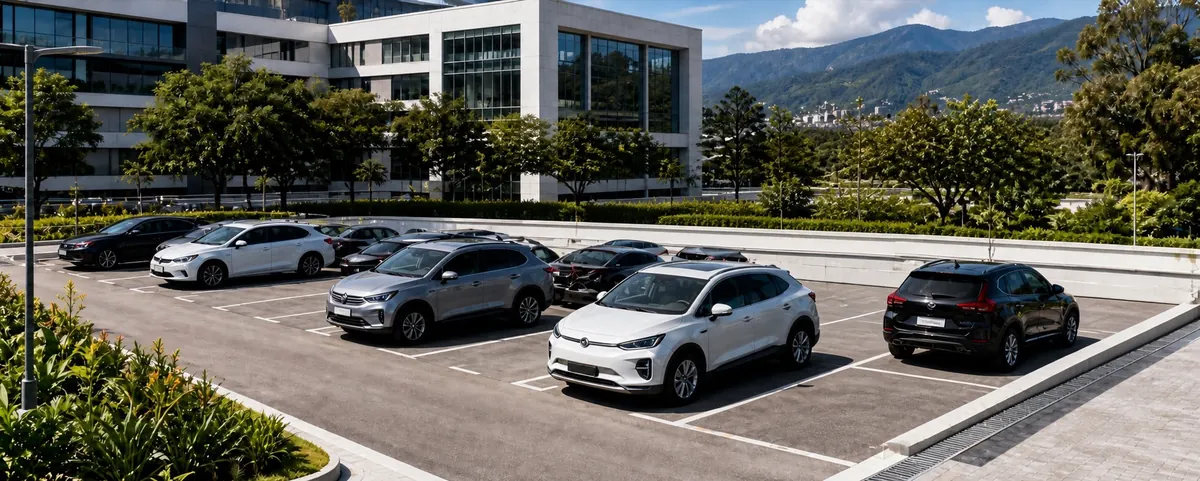
Use the slider, arrow keys or buttons.
Conceptual visualization. It does not represent a documented Zaxon project.
- 01Starting point
We identify consumption, surfaces, shade and the site’s electrical conditions.
- 02Feasible design
We connect bills, available space and grid conditions to model a PPA structure.
- 03Solar carport
The parking area can add shade, energy generation and supported operations.
- 04Additional value
The project may include EV charging stations with no installation cost to the client. Their inclusion and rainwater collection depend on design and feasibility.
From assessment to operation
Project pathway
A clear path, stage by stage.
The process advances in stages to validate the project before requesting detailed technical information or starting construction.
Initial contact
A phone call and Teams meeting to understand the site and explain the model.
Energy bills
We ideally receive six bills; one is enough to start the review.
Simulation
We prepare scenarios and an initial proposal for the site.
Confidentiality
We formalize the applicable agreement before requesting detailed technical information.
Technical visit
We review drawings, meters, equipment, surfaces, and connection conditions.
Final proposal
We refine the design and conditions for the client’s approval.
PPA agreement
The 15- or 20-year project is formalized under its specific conditions.
Construction and operation
Construction may take around four months, depending on scope, permits, and site conditions.
Documents for each stage
Information by stage
The right information, at the right time.
To get started
- One recent bill is enough for a preliminary assessment.
- Six months of bills provide a better view of the consumption profile.
- Contact information and the location of the site to be assessed.
After moving forward
- Available electrical drawings and technical documentation.
- Photos of meters, inverters, and potential installation areas.
- Visit, measurements, and validation under the applicable agreement.
Frequently asked questions
What matters before you begin.

A clear model, one step at a time.
Does the client invest in the project?
No upfront client investment is required for projects that meet feasibility criteria. Costs and responsibilities are organized within the project’s financial and contractual structure.
How much can the tariff decrease?
There is no universal percentage. The proposed tariff and potential benefit depend on consumption, design, financing, and the conditions of each site.
Can several sites be assessed together?
Each site is studied independently. If an organization has several locations, a separate assessment is completed for each one.
Do you work with public and private entities?
Yes. Industry does not limit the initial assessment, provided the site meets the required criteria.
What happens to the assets at the end?
Assets included in the project pass to the client with no additional payment when the agreement ends, under the agreed contractual conditions.
Can the project include EV charging stations at no cost?
Yes. When included in the approved project, the client does not pay for the installation of EV charging stations. Their inclusion, quantity, operation and energy-use terms are defined for each project; they are not automatically included at every site. Rainwater collection is also optional.
Who handles maintenance?
The project structure provides for monitoring, maintenance, insurance, and repairs during the agreement, in accordance with its conditions.
How many bills do I need to begin?
Ideally, six months. However, one recent bill is enough for a first review and to determine whether it makes sense to continue.